Saturday, 28 July 2018

16th July 2018

More than 100 species again with some quality amongst the quantity. Four species new for the garden, all of which are lifers:

[447] Double Lobed

[448] Gracillaria syringella
[449] Aproaerema anthyllidella
[450] Cochylimorpha straminea


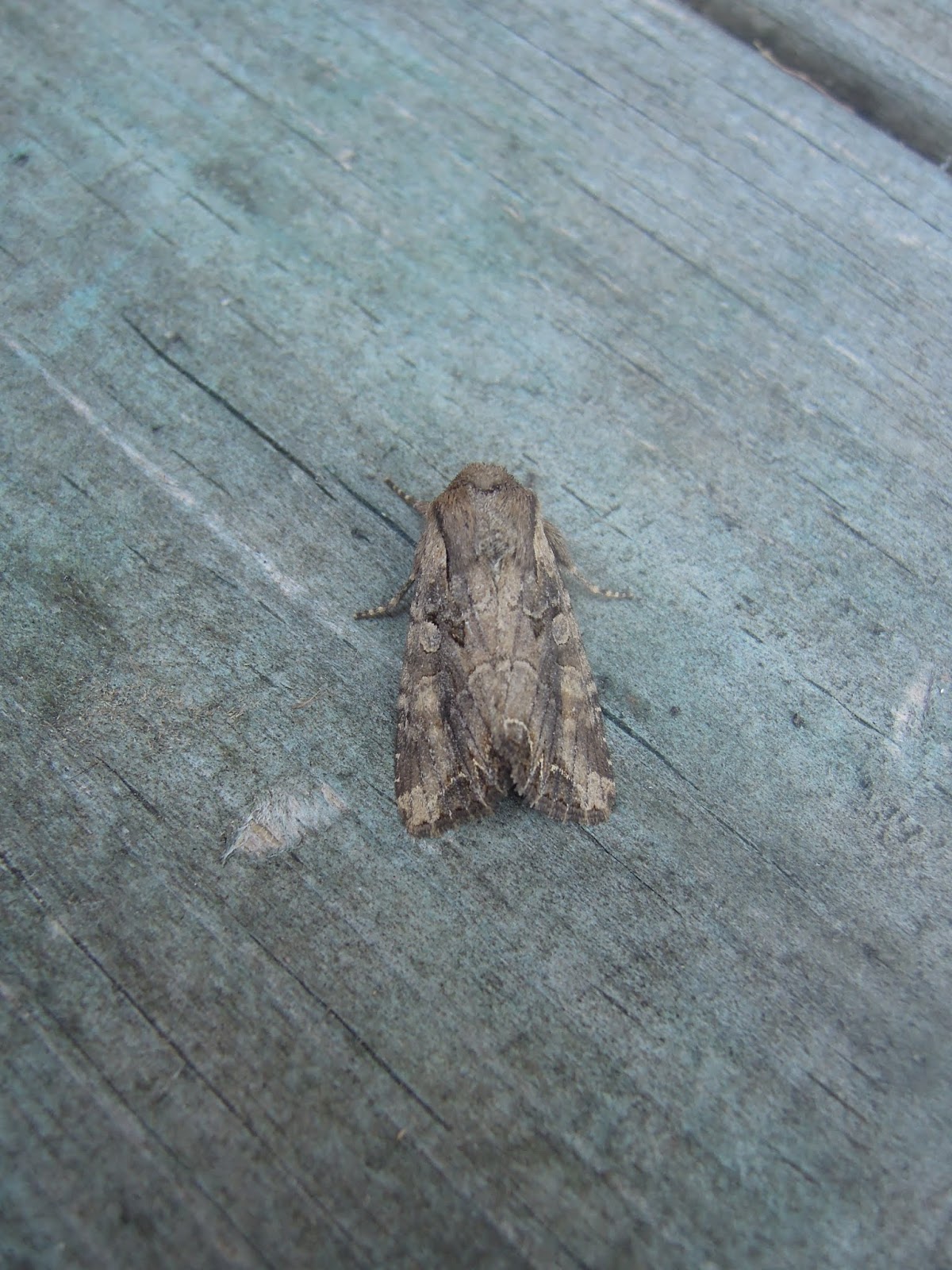
Double Lobed Lateroligia ophiogramma
Gracillaria syringella

This gelechid took some working out but seems ok for A. anthyllidella more by a process of elimination (not that you could tell by the terrible photo):


Aproaerema anthyllidella
Cochylimorpha straminea

Best of the rest included two Tree Lichen Beauty, with this being the smartest:


Tree Lichen Beauty Cryphia algae
While Olive is always welcome:


Olive Ipimorpha subtusa
While this Webb's Wainscot is substantially brighter than others I've caught and caused me to consider other species:


Webb's Wainscot Globia sparganii
Acrobasis consociella


Possibly better than all the moths though was this stunning Large Poplar Longhorn Beetle which was perched on the side of the trap:


Large Poplar Longhorn Beetle Saperda carcharias 

Wednesday, 11 July 2018

10th July 2018

Possibly the smallest moth I have caught - features look a very good match for:

[446] Stigmella aurella


Tuesday, 10 July 2018

7th July 2018

Another tremendous catch with 111 species meaning that over the two nights I caught around 150 species in total. Headliners were the rare migrant pyralid Sciota adelphella, which may be the first record for VC29 plus my second ever Goat Moth. 

Five were new for the garden:


[441] Monochroa cytisella

[442] Hemp-agrimony Plume
[443] Sciota adelphella
[444] Common White Wave
[445] Dog's Tooth


Sciota adelphella

Monochroa cytisella is  a scarce gelechid with bracken as its food plant. I wonder if this individual has wandered from the Brecks?


Monochroa cytisella

Hemp-agrimony Plume is the smallest UK plume and I almost brushed it off as something over than a moth! 


Hemp-agrimony Plume Adaina microdactyla

Common White Wave has done well no to be trapped in the garden until now:


Common White Wave Cabera pusaria
Dog's Tooth has always been scarce though - just two records in Cottenham previously - 200 and 2013):

Dog's Tooth Lacanobia suasa
As nice as all the above are, they are not in the same league as....


Goat Moth Cossus cossus


Although I reckon The Drinker is a really tremendous moth too (2nd for the garden):


Drinker Euthrix potatoria

Monday, 9 July 2018

6th July 2018

An amazing night and morning with 115 species identified which is likely a record catch for me in Cottenham. After over two hours of processing I ended up with eleven moths new for the garden with four of these completely new to me:

[430] Batia lunaris

[431] Batrachedra pinicolella
[432] Parachronistis albiceps
[433] Gelechia sororculella
[434] Epinotia tenerana
[435] Cydia fagiglandana
[436] Pammene fasciana
[437] Acrobasis suavella
[438] Small Emerald
[439] Large Twin-spot Carpet
[440] July Highflyer


Batia lunaris is smart micro that I've recorded just once previously (July 2013):


Batia lunaris
Terrible photo but this minuscule Batechedra pinicolella was nearly missed. The first record for me of this Nationally Scarce B species which is very local in East Anglia. 


Batrachedra pinicolella
Parachronistis albiceps is a distinctive gelechid which again seems to be far from regular in the area; this is the first that I have trapped:


Parachronistis albiceps
Another gelechid, not as smart as the above but still relatively distinctive is this Gelechia sororculella. It is supposed to be common nationally but there aren't many records from either Hunts or Norfolk:


Gelechia sororculella
Same goes with this tortrix, Epinotia tenerana (AKA Nut Bud Moth), although it does seem a bit more regular in north Norfolk. 


Nut Bud Moth Epinotia tenerana

I had a run of a few records of Cydia fagiglandana records in 2015 which at that time were some of the first records in VC29 I seem to remember. I haven't caught any since however and I struggled to recognise this ones identity!


Cydia fagiglandana

Yet another tortrix, Pammene faciana I've recorded a few times but not since 2015:


Pammene fasciana

Of several species of similar looking pyralids, Acrobasis suavella is one of the more rarely encountered here. I trapped this species three times at Corbett Street  (in 2013 and 2014):


Acrobasis suavella

Small Emerald used to be pretty common with several recorded at Corbett Street annually. Not sure why but glad to get it on the High Street list at last:


Small Emerald Hemistola chrysoprasaria

Despite being apparently common in the region I've trapped just one Large Twin-spot Carpet before (July 2014). So I was surprised to get three in the trap this morning:


Large Twin-spot Carpet Xanthorhoe quadrifasciata

and finally, my first July Highflyer since 2013:


July Highflyer Hydriomena furcata

Friday, 6 July 2018

4th July 2018

Two new micros for the garden amongst 95 species recorded:

[428] Parawammerdamia nebulella

[429] Zeiraphera ratzeburgiana

I struggled to get anywhere with the tortrix so thanks to Malcolm Anderson for pointing me in the right direction (its AKA Spruce Bud Moth):


Spruce Bud Moth Zeiraphera ratzeburgiana


Paraswammerdamia nebulella
Amongst those new for the year was this Dun-bar:


Dun-bar Cosmia trapezina
While it was good to get male and female Ghost Moths side by side:


Ghost Moth Hepialus humuli


30th June 2016

Just one new and a boring (and probably previously overlooked) scoparid at that:

[427] Eudonia pallida


Eudonia pallida
A bit better looking was this unusually well marked Buff Ermine:


Buff Ermine Spilosoma lutea
Agapeta hamana is regular during mid-summer:


Agapeta hamana
While I've trapped Small Rivulet just a handful of times:


Small Rivulet Perizoma alchemillata
I stopped attempting to differentiate at Uncertain / The Rustics a long time ago but this one seems as good as Rustic as you can get I guess:


Rustic Hoplodrina blanda

Thursday, 5 July 2018

25th June 2018

The warm nights continue and again, two new for the garden:

[425] Argyresthia albistria

[426] Four-dotted Footman

The micro below caused a lot of headaches and it took some time before I was content that it was an Argyresthia. It matched no particular species in Sterling & Parsons however, so I had to do plenty of digging. I found reference in a couple of places to unicolorous forms of A. albistria and A. conjugella. My moth certainly isn't the latter so partly by a process of elimination I became comfortable with it being the former (AKA Purple Argent). This was supported by an independent suggestion of the same conclusion. 


Argyresthia albistria
Four-dotted Footman is scarce round here and I've recorded it just once before (June 2014):


Four-dotted Footman Cybosia mesomella
The other highlight was this superb Poplar Hawk-moth of the uncommon 'buff' form - although its more lilac than anything:


Poplar Hawk-moth Laothoe populi
Other footmen are quite prolific at the moment - here's a shot of both Common and Scarce:


Scarce Footman Eilema complana; Common Footman Eilema lurideola


Common Carpet Epirrhoe alternata


23rd June 2018

Two good looking species new for the garden:

[423] Blue-bordered Carpet

[424] Lilac Beauty

Unfortunately the Lilac Beauty scarpered before being photographed but the carpet stuck around:


Blue-bordered Carpet Plemyria rubiginata
Plenty of 'waves' are now regular in the trap, with these the most common:


Riband Wave Idaea aversata 


Riband Wave Idaea aversata f. remutata


Single-dotted Wave Idaea dimidiata


Small Fan-footed Wave Idaea biselata


Dwarf Cream Wave Idaea fuscovenosa