Tuesday, 14 June 2016

June orchids in Cambridgeshire

I've come across a few orchid species in the last week, most of which are looking quite tidy. As the photograph demonstrates though, I'll have to go back for the Lizard Orchids when they have developed a bit further....

Pyramidal Orchid

Lizard Orchid

Early Marsh Orchid

Bee Orchid

Monday, 13 June 2016

9th June 2016

A quieter night with Diamond-back Moths back down in to single figures. The most interesting moth was a Hadena coronet, which I intituially passed off as Varied Coronet. This species is annual in small numbers in Cottenham (or was at Corbett Street at least). However on looking at photos the white blotches on the subterminal line led me to consider Marbled Coronet. So ..a little confusing. Feedback has been varied (excuse the pun) but on balance it's small size probably means its just a slightly unusual Varied Coronet? Either way, its a smart moth...

Including this species, 4 new for the garden:

[71] Monopis crocicapitella
[72] Common Carpet
[73] Turnip Moth
[74] Varied Coronet


7th June 2016

A humid night that included some prolonged heavy downpours resulted in a good set of moths at last - a total of 38 species, which probably what is expected of early June.

The Diamond--back moth invasion continued unabated - a ridiculous 120 at least were in the trap and there could have been a lot more - a fair amount of them flew out as soon as i opened the trap. Some were also looking at providing the next generation too:


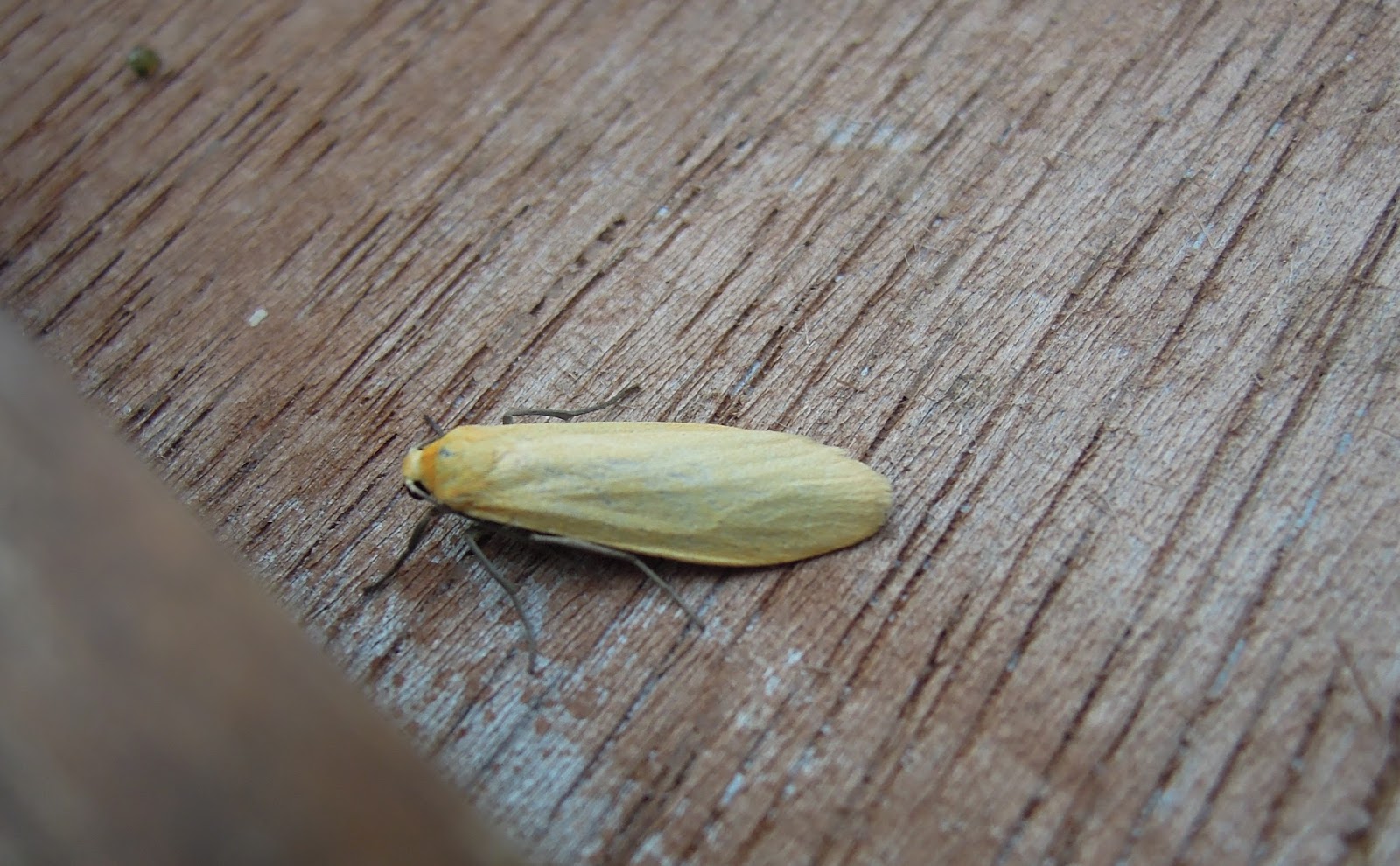
The main highlight though was an Orange Footman, a woodland species that ~I have only recorded in Cottenham twice before.

Orange Footman (Eilema sorocula)


New in for the garden were:

[47] Thistle Ermine
[48] Red-barred Tortrix
[49] Notocelia cynosbatella
[50] Cinnabar
[51] Light Emerald
[52] Green Carpet
[53] Clouded Border
[54] Scorched Wing
[55] Peppered Moth
[56] Mottled Pug
[57] Willow Beauty
[58] Privet Hawkmoth
[59] Buff Ermine
[60] Orange Footman
[61] Large Yellow Underwing
[62] Rustic Shoulder-knot
[63] Tawny Marbled Minor
[64] Middle-barred Minor
[65] Mottled Rustic
[66] Poplar Grey
[67] Common Wainscot
[68] Light Brocade
[69] Silver Y
[70] The Herald

Light Brocade (Lacanobia w-latimum)


Clouded Border (Lomaspilis marginata)


Willow Beauty (Peribatodes rhomboidaria)


The Herald (Scoliopteryx libatrix)


Mottled Rustic (Caradrina morpheus)

Middle-barred Minor (Oligia fasciuncula)


Wednesday, 8 June 2016

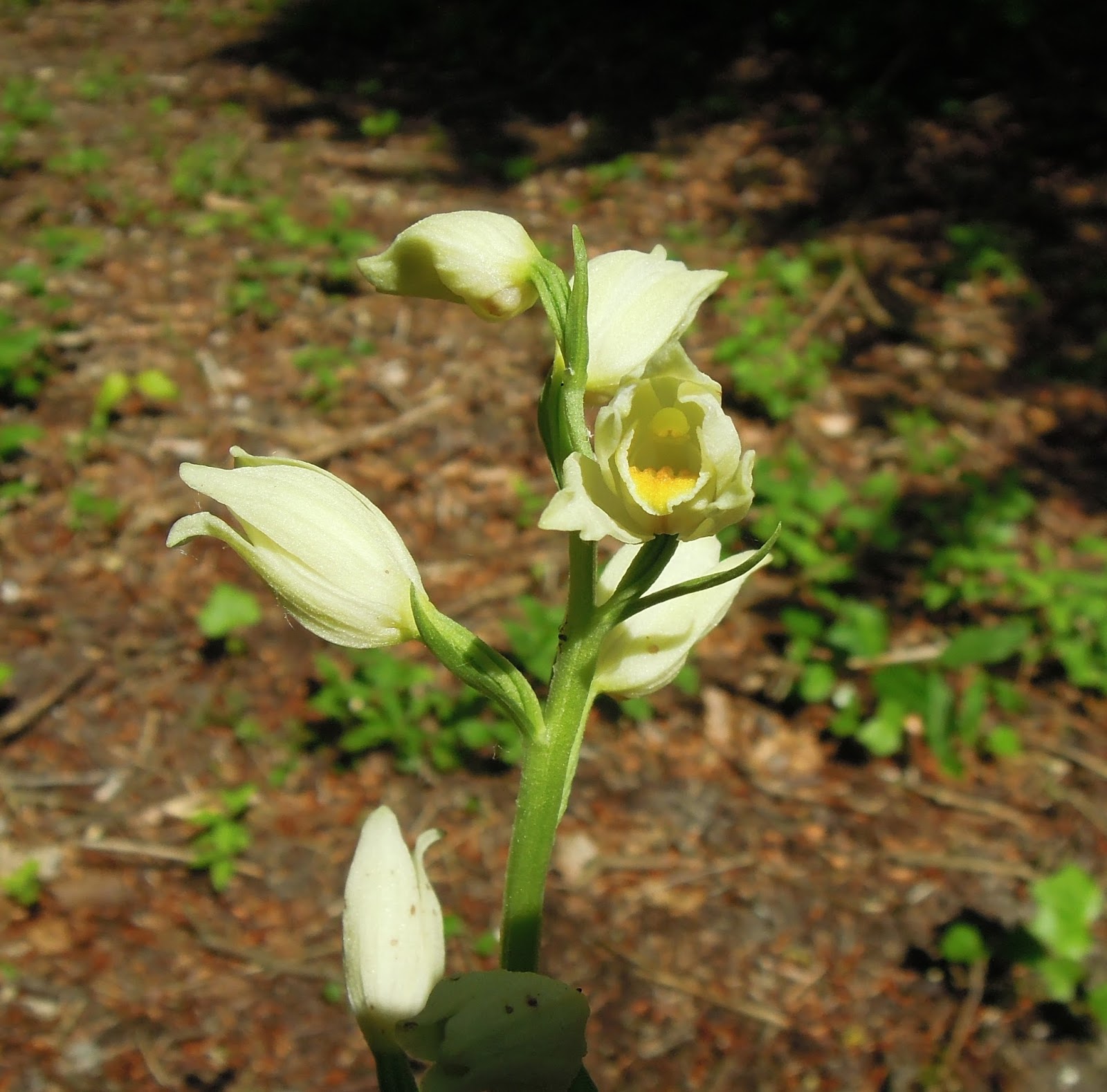
White Helleborines at Beechwoods LNR

It does take a lot for me to look at non-flying objects but orchids can be out down as an exception. Many White Helleborines were out in various stages of flowering over the weekend at Beechwoods near Fulbourn. This is a site I had a never been too before and on our brief visit it looked quite useful for butterflies too. 


Monday, 6 June 2016

4th June 2016

The bulk of moths that turned up were predictably a bunch of Diamond-backs but this was a tiny fraction of the hordes seen along Cottenham Lode - they are just about everywhere. 

A few common species added to the garden list:

[42] Argyresthia goedartella 
[43] Scoparia ambigualis
[44] Heart & Dart
[45] Cabbage Moth
[46] Vine's Rustic


Argyresthia goedartella f. splendida

Heart & Dart Agrotis exclamationis

Vine's Rustic Hoplodrina ambigua
 There was also the first Cockchafer of the year - a proper beast.


Cockchafer Melolontha melolontha


Monday, 30 May 2016

28th May 2016

A return of just two moths in late May is incredibly awful, although if one of them is a Pine Hawk-moth it doesn't feel too bad.....

[41] Pine Hawk-moth

Pine Hawk-moth Sphinx pinastri

27th May 2016

The first hawk-moth of the year was a dapper Poplar, although there was only a handful of other species. These included a couple of White Ermine - not a terribly common species over (albeit annual) and this was, I think, my first ever multiple record. 

[37] Poplar Hawk-moth
[38] White Ermine
[39] Treble Lines
[40] Pale Mottled Willow

Poplar Hawkmoth Laothoe populi

White Ermine Spilosoma lubricipeda

Treble Lines Charanyca trigrammica

Pale Mottled Willow Caradrina clavipalpis

results are in pt.2

In terms of species recorded, the Top 20 in terms of abundance were....

1. Large Yellow Underwing (3420)

2. Dark Arches (2873)
3. Shuttle-shaped Dart (1607)
4. Setaceous Hebrew Character (1379)
5. Heart And Dart (1341)
6. The Uncertain (1283)
7. Common Rustic agg. (1122)
8. Double Square-spot (1062)
9. Dot Moth (767)
10. Willow Beauty (728)
11. Large Nutmeg (715)
12. Lesser Yellow Underwing (640)
13. Chrystoeuchia culmella (527)
14. Common Footman (448)
15. Lesser Broad-bordered Yellow Underwing (407)
16, Square-spot Rustic (365)
17. Silver Y (364)
18. Flounced Rustic (358)
19. Riband Wave (343)
20. Buff Ermine (334)


Most abundant moth species 2009 - 2015

So perhaps its no surprise that Large Yellow Underwing comes out top. Somewhat insane that I've counted 3420 of the critters over the years. That's a significant amount of bat food.


All the top 9 are noctuids until we get to Willow Beauty at #10. A single micro, the crambid C.culmella sneaks in at #13. This species would have course be a lot higher if I'd bothered recording them before 2013. 


If we look at records of each species rather than abundance:


Moth records 2009 - 2015
So good old Large YU comes out on top again (recorded on 232 occasions!)  but things elsewhere are a bit different. Willow Beauty jumps to #2, while Garden Carpet is a new entry at #5, while a few other geometers are present (Brimstone, Riband Wave, Double-striped Pug). 

For what its worth here's the top 10 micros, which are dominated by 3 abundant crambids, followed by the increasingly ubiquitous Light Brown Apple Moth: 


The results are in

After finally sitting down to the data entry for 2015's moth trapping (I blame the house move) it appears that the final species total at Corbett Street was 457.

This was from 6 full years and also the tail end of 2009. This is more than I ever expected, especially as I only started looking at micro moths in 2013.

Keeping records of each trap night provides a bit of an opportunity at looking at some stats...here's the cumulative list as it developed from 2009 to 2015:


Corbett Street Moth List


Obviously that doesn't tell the whole story as the rapid increase in 2013 reflects when I first started recording micros. Although it does imply that I hadn't reached a plateau quite yet, but it does suggest that it might be quite difficult to record much over c.300 macro moth species round here.

Species totals in each year showing both macro and micro moths
:


Moth species recorded each year

2009 doesn't really count as I started in late July, but overall the number of macro moths species recorded was quite variable. 2012 was the best year while last year was quite poor. 2015 had a cold spring and I didn't trap in late summer much at all. The total of micro species recorded in a year does in contrast seem remarkably consistent; which is quite surprising as I expect that I overlooked some of the more cryptic species in 2013.


 A graph showing trap effort:


Trap nights each year at Corbett St

So although 2012 was the year when most macro species were recorded, effort was not at the level of 2011 or 2014. Quite amazing (or worrying?!) that the trap went out 70 times in 2014! 2014 did result in the greatest species total of all moths.


A graph showing species recorded in each month gets a predictable result:


Moth species recorded each month

So July rules without having any real competition (324 species), while both June and August (219 and 218 respectively) are some way behind. The graph does suggests that I need to get the trap out in January and February...perhaps!


Sunday, 22 May 2016

21st May 2016

It couldn't get any worse than the previous night so a return of 12 species seems almost reasonable. A bonus was a species I've never seen before Nephopterix angustella ('Spindle Knot-horn') and a tortrix I've failed to identify (**later identified as Epinotia immundana by David Griffiths**). 

New for the garden:

[28] Common Swift
[29] Light Brown Apple Moth
[30] Nephopterix angustella
[31] Streamer
[32] Spruce Carpet
[33] Setaceous Hebrew Character
[34] Marbled Minor
[35] Epinotia immundana
[36] Common Pug


Nephopterix angustella

Epinotia immundana

Common Swift Korscheltellus lupulina
Streamer Anticlea derivata

Spruce Carpet Thera britannica

Flame Shoulder Ochropleura plecta

20th May 2016

Despite seemingly favourable conditions the results were pretty disastrous - 2 moths!

One was the first grass moth (crambid) - Crambus lathoniellus, but I'm not sure that counts as a highlight.

[27] Crambus lathoniellus

Crambus lathoniellus

19th May 2016

A handful of common species new for the year but both numbers and diversity still low. A Diamond-back Moth has the honour of being the first 'migrant' caught in the garden. 

[23] Pebble Hook-tip
[24] Large Nutmeg
[25] Brimstone Moth
[26] Diamond-back Moth


Brimstone Moth Opisthograptis luteolata

Diamond-back Moth Plutella xylostella

Large Nutmeg Apamea anceps

Wednesday, 18 May 2016

17 May 2016

A poor catch for this time of year especially as the weather appeared quite useful. Our local Soprano Pipistrelles were out in force early on but judging by the results in the moth trap they would have struggled (unless they munched everything in sight befoire it got to the trap of course....).

Just 10 moths of 8 species with a few expected (and common locally) species new for the garden:

[16] Brown House Moth
[17) Agonopterix arenella
[18] Bee Moth
[19] Double-striped Pug
[20] Garden Carpet
[21] Waved Umber
[22] Muslin Moth

There was the second Swallow Prominent of the year and no apologies for posting another photo of that species below.

Agonopterix arenella

Bee Moth Aphomia sociella

Waved Umber Menophra abruptaria

Garden Carpet Xanthorhoe fluctata

Muslin Moth Diaphora mendica